
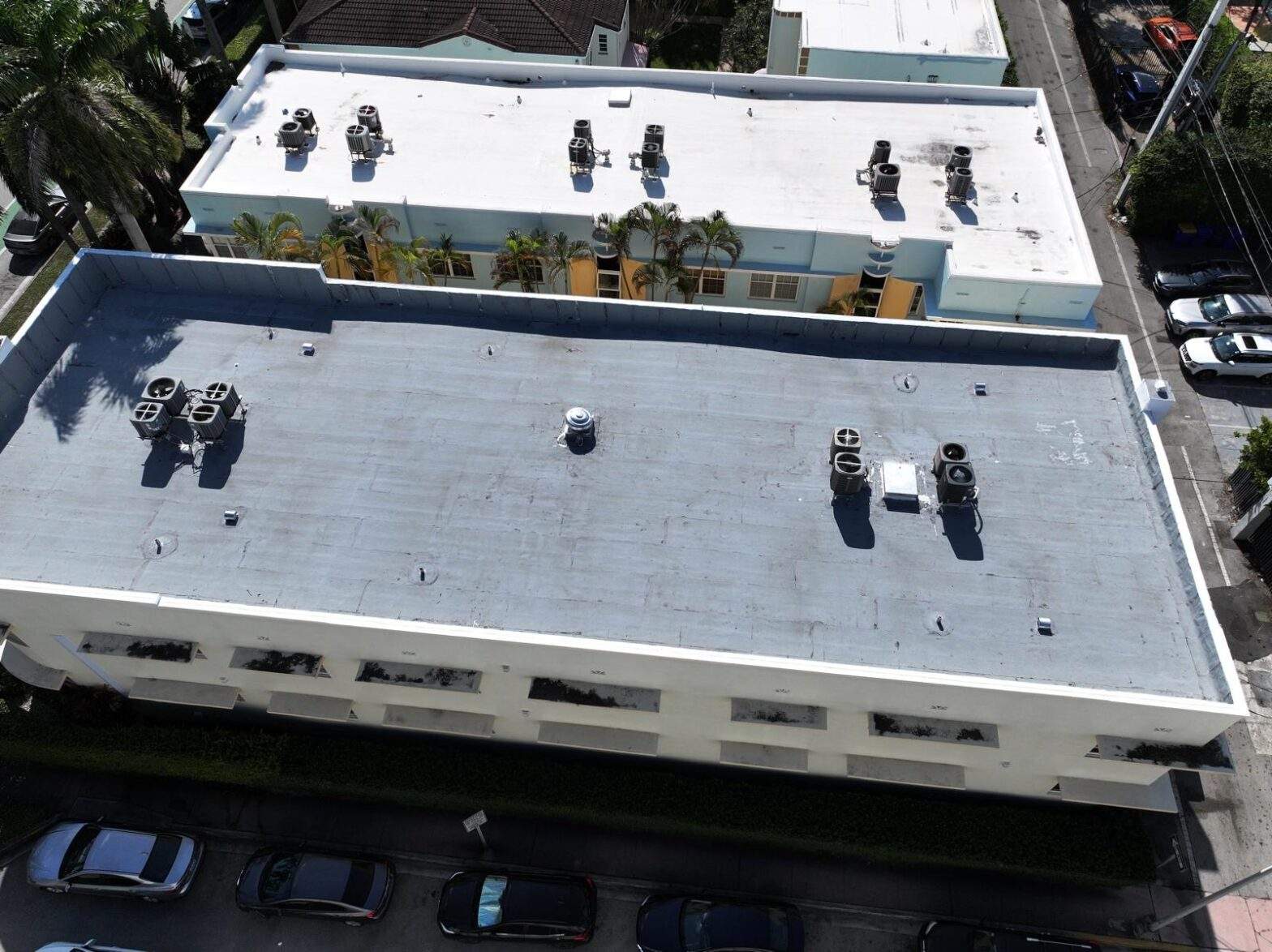
Commercial roofs protect your building from constant exposure to sun, rain, wind, and temperature changes. Over time, these conditions gradually wear down even durable roofing systems.
Flat roofs face additional stress because their design does not shed water as quickly as sloped roofs. That’s why it’s important for property managers and business owners to recognize early warning signs. Commercial flat roof repairs often begin with minor damage that spreads when left untreated. By identifying problems early, you can protect your building, avoid interior damage, and reduce the likelihood of costly repairs.
The Primary Enemy: Understanding Commercial Flat Roof Vulnerabilities
Flat and low-slope roofing systems rely on proper drainage to move water away from the surface. When drains clog or roofing materials begin to deteriorate, water can remain on the roof longer than intended.
Standing water, UV exposure, and seasonal temperature changes gradually weaken roofing membranes and seams. Rooftop equipment, HVAC units, and routine maintenance traffic can put extra stress on the roof surface.
Many flat roof issues develop slowly. Moisture may seep beneath the roofing membrane long before leaks appear inside the building. Once water enters the roofing system, it can spread into insulation and structural materials, increasing the scope of the repair.
Routine inspections and preventative maintenance help identify these concerns early. Addressing minor problems quickly allows contractors to complete targeted commercial flat roof repairs before the roofing system deteriorates further.
Visible Warning Signs: What Your Roof Is Telling You
Commercial flat roofs often show visible signs when problems develop. Watching for these indicators can help property owners act before damage spreads.
Some of the most common signs of flat roof damage include:
- Ponding water. Water that remains on the roof more than 48 hours after rainfall can accelerate membrane deterioration and increase the risk of leaks.
- Membrane blisters or bubbles. Trapped air or moisture beneath the roofing material can create raised areas that weaken the membrane over time.
- Cracks or splits in the roofing surface. Sun exposure and temperature fluctuations cause roofing materials to expand and contract, eventually leading to surface damage.
- Flashing separation. Flashing around roof edges, vents, and rooftop equipment can loosen or deteriorate, creating entry points for water.
- Interior water stains. Discoloration on ceilings or walls often indicates that water has already penetrated the roofing system.
- Higher energy costs. Damaged roofing insulation can reduce energy efficiency and force HVAC systems to work harder.
The Cost of Inaction: Why Early Repairs Save You Money
Ignoring early roofing problems rarely saves money. Minor damage tends to spread once moisture enters the roofing system.
Timely commercial flat roof repairs help stop damage before it spreads. In many cases, early repairs extend the life of the existing roof and delay the need for a full replacement.
Delaying repairs can lead to:
- Structural damage to the roof decking
- Mold growth inside the building
- Interior damage to equipment, inventory, or workspaces
- Emergency repairs that interrupt business operations
- Higher long-term repair or replacement costs
Safeguarding Your Commercial Asset
Your roof protects everything beneath it, including employees, customers, equipment, and inventory. Taking a proactive approach helps keep that protection in place.
Professional roofing contractors can inspect your roof, identify hidden flat roof issues, and recommend the right repair strategy. Regular inspections allow property owners to plan maintenance, reduce risk, and keep roofing systems performing as intended.
Are you noticing warning signs such as standing water, membrane damage, or interior moisture? Don’t wait. Contact us today to schedule a commercial roof inspection. Addressing problems early helps prevent minor damage from escalating and keeps your building protected for years to come.